Tree Removal Services in Wilmington NC: Clearing Your Site
Tree removal services in Wilmington NC are often the first major step in preparing a property for new construction. Before concrete is poured or framing goes up, mature pines, hardwoods, brush, old stumps, uneven ground, and limited access can all stand between a vacant lot and a buildable site.
We handle tree removal as part of the larger site-preparation process. That distinction matters. Basic clearing may remove visible brush and a few small trees, but construction-ready clearing requires a closer look at the building footprint, driveway access, drainage, utility routes, soil conditions, stump removal, and the equipment needed to move safely through the property.
For property owners, builders, and developers, the goal is not simply to make a lot look open. The goal is to create a clean, stable, accessible work area that supports the next phase of construction.
Why Construction Clearing Is Different From Basic Lot Clearing
A property can appear relatively clear and still create serious problems once construction begins. A few standing trees may interfere with the planned building pad. Root systems can affect excavation. Stumps can block grading equipment. Dense vegetation can hide old concrete, fencing, trash, septic components, or uneven terrain.
Basic clearing usually focuses on surface-level vegetation. Construction clearing involves preparing the site for a defined purpose.
That may include:
- Removing trees within the home, commercial building, garage, or addition footprint
- Clearing space for a driveway, access road, parking area, or equipment route
- Removing stumps and major root systems
- Addressing trees that lean over the planned work area
- Clearing space for utility installation or trenching
- Removing debris left from prior structures or land use
- Preparing the property for rough grading and drainage work
- Creating enough room for excavation, demolition, material deliveries, and construction equipment
Wilmington-area lots often present a mix of challenges. Coastal weather can weaken trees over time. Pine-heavy properties may have tall trees with long limbs overhanging the site. Older residential lots can contain hidden remnants of past structures, landscaping, fences, or outbuildings. Larger undeveloped parcels may have thick brush and mature growth that cannot be handled efficiently with light-duty equipment.
Tree removal services in Wilmington NC often fall into two broad categories: routine residential tree work and site-clearing work connected to construction. The second category requires planning around the finished project, not only the tree itself.
Signs Your Lot Needs More Than Tree Trimming
Tree trimming has its place. It can improve clearance around a structure, remove dead branches, and reduce limb interference near a driveway or roofline. But trimming does not solve the site-preparation issues that arise when a property is being developed or rebuilt.
A lot usually needs more extensive work when trees, stumps, roots, or vegetation interfere with the actual construction plan.
The Building Footprint Is Obstructed
The most obvious reason for removal is a tree located where a structure must go. That could be a new home, detached garage, commercial building, storage structure, patio, retaining wall, pool, or addition.
Before removing anything, we look at the proposed footprint and the working space around it. Builders need room for excavation equipment, footings, foundation work, deliveries, scaffolding, and crew access. A tree that sits just outside the foundation line may still create a problem if its limbs or root system extend into the work zone.
Stumps and Root Systems Remain in the Ground
Leaving stumps behind can create long-term issues. A stump may interfere with grading, excavation, trenching, paving, or foundation preparation. Roots can continue to occupy a large portion of the site even after the visible tree is gone.
For construction purposes, stump removal is often as important as cutting down the tree. Grinding may be appropriate in some locations, while full removal may be necessary where excavation, utilities, or structural work will take place.
The right approach depends on what will be built and how deep the planned work extends below grade.
Trees Create Equipment Access Problems
Construction equipment needs room to enter, turn, stage materials, and work safely. A narrow wooded entrance, low branches, closely spaced trees, or large stumps can prevent equipment from reaching the areas that need excavation or grading.
This can affect more than the first day of work. If a concrete truck, dumpster, skid steer, excavator, or delivery vehicle cannot access the site when needed, construction can slow down quickly.
We often consider access early because removing a small number of strategically located trees can make the entire project easier to manage.
Trees Threaten the Work Area
Dead, damaged, leaning, or unstable trees near a construction site deserve immediate attention. Heavy machinery, vibration, soil disturbance, and changing drainage patterns can affect trees that already have weakened root systems or structural problems.
A tree may not be inside the building footprint, but it can still pose a risk if it leans toward the work area or has large limbs overhanging future construction. Removing a hazard tree before work begins is usually safer than trying to work around it after crews and equipment are already on site.
The Lot Has Dense Overgrowth
Brush, vines, saplings, fallen limbs, and unmanaged vegetation can hide conditions that matter during construction. Dense growth may conceal holes, old foundations, buried debris, fencing, drainage features, or changes in elevation.
On a heavily overgrown lot, the first stage may involve opening the property enough to assess what is actually there. Once the site is visible, we can better determine which trees should remain, which need removal, and what additional clearing or demolition work may be required.
Planning Tree Removal Around the Construction Project
Tree removal for construction should not happen in isolation. The work needs to line up with the site plan, the construction schedule, local requirements, and the practical needs of the builder.
We begin by looking at what the property needs to become.
A homeowner preparing for a new house has different needs than a contractor preparing a commercial pad. A builder adding a garage may need selective removal along one side of a lot. A developer preparing several lots may need a larger clearing plan that accounts for future infrastructure, drainage, and access.
Start With the Site Plan
A survey, building plan, plot plan, or rough site layout provides useful direction for tree removal services in Wilmington NC. It shows where the structure, driveway, setbacks, parking areas, utility connections, and drainage features may be located.
With that information, we can identify trees that clearly conflict with the project and trees that may be worth preserving. Mature trees can add value and character to a finished property, but only when they can safely remain without interfering with construction or future maintenance.
Keeping every tree is not always practical. Removing every tree is not always necessary. The best result usually comes from making deliberate decisions before equipment arrives.
Consider the Entire Work Zone
The building footprint is only one part of the project. Construction also requires temporary space around it.
That work zone may include:
- Equipment travel paths
- Material staging areas
- Dumpster placement
- Concrete truck access
- Utility trench routes
- Drainage improvements
- Temporary soil storage
- Areas for excavation spoil
- Driveway and road construction
- Space for crews to work safely
A tree may stand well away from the proposed structure but still block a needed access route or staging area. Looking at the full work zone helps prevent last-minute changes after construction has started.
Think About Drainage Before Clearing
Wilmington receives substantial rainfall, and coastal conditions can make drainage a major consideration on many properties. Tree removal changes the land surface. It may expose slopes, alter how water moves through the lot, and remove vegetation that once absorbed rainfall.
Clearing should be coordinated with grading and drainage plans. In some cases, the site will need erosion-control measures, temporary drainage management, or a schedule that limits how long bare soil remains exposed before the next stage of work.
Removing trees without considering water flow can create muddy access areas, washouts, standing water, or erosion problems later.
Account for Utilities and Underground Conditions
Before trees are removed, it is important to identify known utility lines, service connections, septic systems, wells, irrigation components, and other underground features. Roots may grow around or above buried lines. Stumps may sit near old utility routes. Heavy equipment can create damage if the area has not been properly evaluated.
This is particularly important on older lots, properties with previous structures, and parcels where documentation is incomplete. Clearing can reveal conditions that were not visible from the road or through dense vegetation.
What Construction-Focused Tree Removal May Include
Every site is different, but the scope of work often goes beyond cutting trees down. Tree removal services in Wilmington NC should match the actual condition of the lot and the requirements of the planned construction.
Tree Felling or Sectional Removal
On open lots with enough space, trees may be felled in a controlled direction. On tighter properties, near structures, power lines, roads, fences, or neighboring homes, trees may need to be dismantled in sections.
The removal method depends on the tree’s size, condition, lean, location, and surrounding hazards. Large pine trees, hardwoods with broad canopies, and trees near active roads or existing buildings require careful planning.
Stump Grinding or Stump Removal
Stump grinding removes the visible stump below ground level and produces wood chips. It can work well where the area will become landscaping, lawn, or another surface that does not require deep excavation.
Full stump and root removal may be more appropriate in areas planned for foundations, utility lines, driveways, retaining walls, or major grading. The decision should reflect the future use of the area, not just the immediate appearance of the lot.
Brush and Understory Clearing
Smaller trees, vines, shrubs, saplings, and brush often need removal before the main work can proceed. This opens the site, improves visibility, and allows crews to evaluate the terrain.
Brush clearing also helps identify debris that may need separate removal. On neglected lots, we may find old fencing, dumped materials, concrete fragments, deteriorated sheds, or remnants from prior land use.
Debris Removal and Hauling
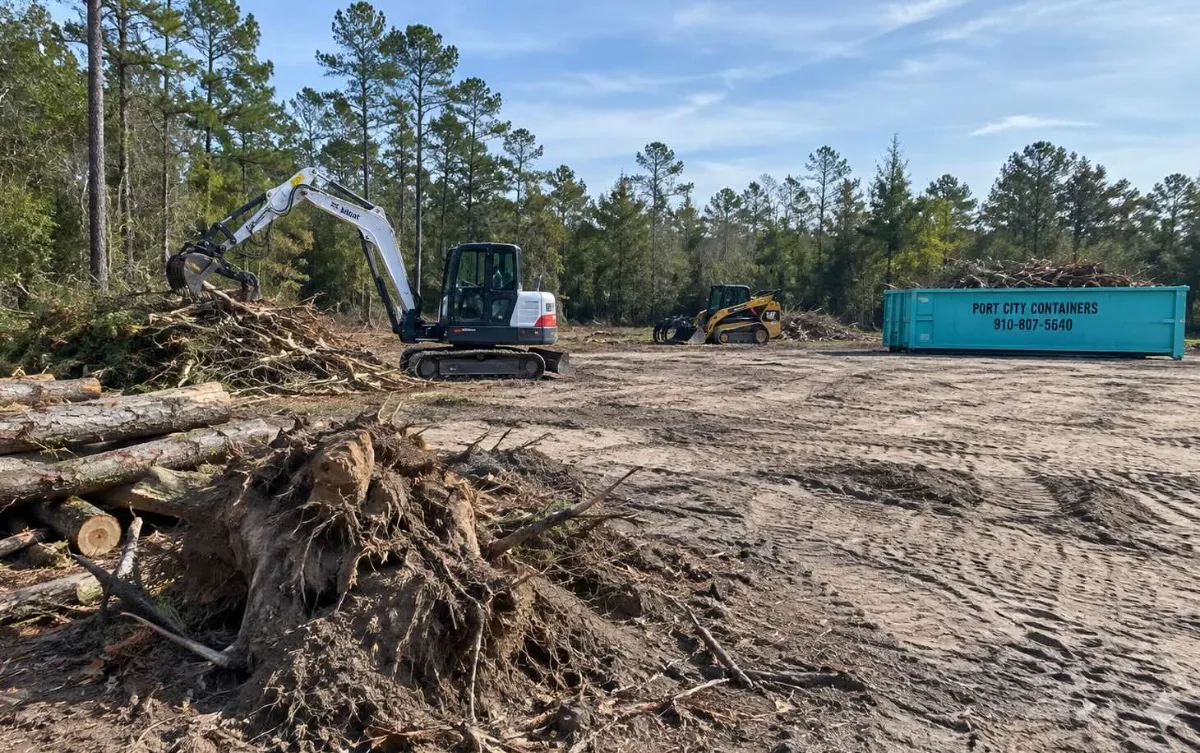
Felled trees produce trunks, limbs, brush, and wood debris. The site needs a plan for handling that material.
Depending on the project, material may be chipped, hauled away, separated, or processed as part of broader clearing work. Leaving piles of debris on site can limit access, create fire concerns, attract pests, and interfere with grading.
Selective Clearing
Selective clearing removes only the vegetation that conflicts with construction while preserving trees that can safely remain. This approach is common on residential sites where owners want to retain shade, privacy, or the natural character of the property.
It requires more attention than simply clearing an entire area. We identify the trees that need to go, protect the trees that will stay, and keep equipment movement controlled so remaining root zones are not unnecessarily damaged.
Local Factors That Matter in Wilmington
Wilmington properties have conditions that can influence tree removal and clearing decisions. The area’s coastal climate, frequent storms, sandy soils, and mix of established neighborhoods and undeveloped land all affect how a site should be approached.
Pines are common throughout southeastern North Carolina and can grow tall with heavy limb structures. Storm damage, disease, past pruning, and root disturbance can affect their stability. Hardwoods may have wide root zones and large canopies that extend well beyond the trunk.
Soil conditions also matter. Sandy soils may drain quickly in some areas, while low-lying lots can hold water after periods of rain. Equipment access can change rapidly when the ground becomes saturated. A clearing plan should account for where equipment can travel without rutting the site or creating unnecessary damage.
Permit requirements may also apply depending on the property, municipality, zoning, tree species, location, and scope of development. Property owners should verify local requirements before removal begins, especially for work near public rights-of-way, protected areas, waterways, or regulated development sites.
We encourage property owners to treat tree removal as an early construction decision rather than a last-minute cleanup task. The trees, roots, and access routes can shape the entire project schedule.
Choosing the Right Scope of Work
The right scope depends on what happens after the trees come down. That is the question that guides everything else.
For example, clearing a backyard for a small shed may involve a few trees, brush removal, and stump grinding. Preparing a lot for a new home may involve tree removal, full stump work, access clearing, debris hauling, grading coordination, and demolition of old site features.
Tree removal services in and around Wilmington NC should account for the site’s intended use, not just the number of trees present.
Before scheduling work, property owners should be ready to discuss:
- The planned structure or project
- The desired building and driveway locations
- Whether a survey or site plan is available
- Trees that must be removed versus trees worth preserving
- Access points for trucks and equipment
- Known utility lines, septic systems, wells, or buried materials
- Whether stumps need grinding or complete removal
- Whether debris must be hauled away
- The expected timing for grading, excavation, or construction
Clear information upfront helps prevent work from being repeated later.
Why Timing Matters
Tree removal is often best completed before major construction activity begins, but the timing should work with the full site schedule.
Removing trees too early can leave exposed soil through an extended rainy period. Removing them too late can delay excavation, utility work, or foundation preparation. In some cases, the best approach is to clear access first, complete an initial site assessment, then remove additional trees once the building layout is confirmed.
Weather can also affect scheduling. Heavy rain can make wooded or low-lying properties difficult for equipment. Storm seasons can create additional hazards from weakened or damaged trees. Planning ahead gives the project more flexibility if conditions change.
For larger jobs, the clearing phase may need to be coordinated with surveyors, engineers, builders, utility providers, grading crews, and local officials. A well-planned sequence keeps the property moving toward construction instead of creating avoidable delays.
What Customers Ask about Our Tree Removal Services in Wilmington NC
Do we need to remove stumps before building on a lot?
Yes, if stumps or major roots are located within the building footprint, driveway area, utility route, excavation zone, or planned grading area. We determine whether grinding or full removal fits the future use of that part of the property.
Can we preserve some trees while clearing for construction?
Yes. We can perform selective clearing when trees can safely remain outside the work zone. We consider the building plan, equipment access, root zones, limb clearance, drainage, and the tree’s overall condition before deciding what to preserve.
How do we know which trees must be removed for a new home?
We compare the proposed building footprint, driveway, utility routes, grading areas, and equipment access needs against the existing trees. Trees within or directly affecting those areas generally need removal.
Should tree removal services happen before excavation and grading my property in Wilmington NC?
In most cases, yes. We remove trees and address stumps before excavation and grading so heavy equipment can work safely and the site can be prepared without obstacles beneath or above ground.
Can tree removal uncover other problems on the property?
Yes. Once brush and trees are removed, we may find old concrete, fencing, buried debris, uneven ground, drainage issues, former structures, or access limitations that were not visible before clearing.