Demolition Permit in Wilmington NC: Do I Need One?
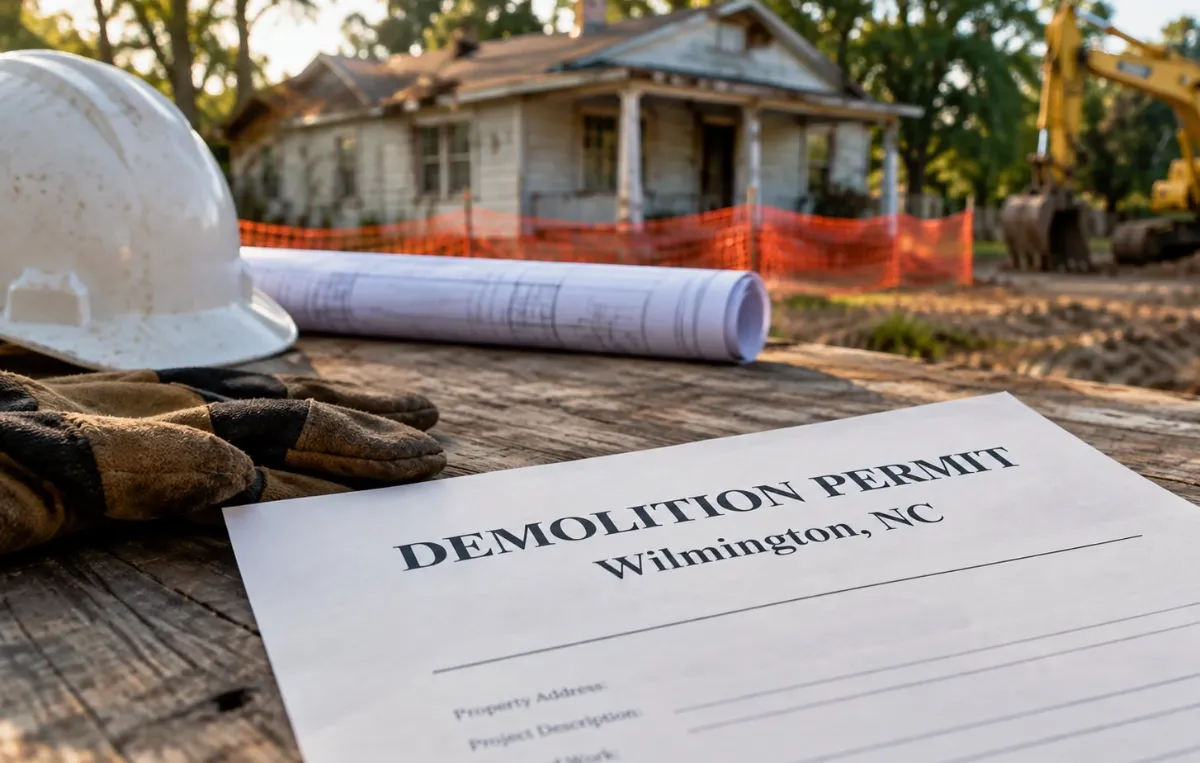
Yes, in most cases, you need a demolition permit in Wilmington NC before tearing down a house, garage, accessory structure, or a substantial portion of an existing building. The permitting process helps the City of Wilmington confirm that utilities are handled safely, debris is managed properly, and the work complies with local building and environmental requirements.
We regularly speak with property owners who are ready to move forward with a teardown but are unsure where permitting begins. Sometimes the house is vacant, damaged by a storm, beyond reasonable repair, or standing in the way of a new construction project. Whatever the reason, demolition is not simply a matter of bringing equipment to the site and starting work. A few important steps need to happen first.
In this guide, the Barnes Demolition team will explore what homeowners, investors, builders, and commercial property owners should know before planning a demolition project in Wilmington NC.
When Is a Demolition Permit Required in Wilmington?
A demolition permit is generally required when you plan to remove an entire residential structure or take down a significant part of one. That can include:
- Single-family homes
- Duplexes and multifamily residential buildings
- Detached garages
- Sheds and accessory buildings
- Mobile homes or manufactured homes, depending on the site and removal method
- Commercial buildings
- Fire-damaged or structurally compromised structures
- Portions of a building involved in a major renovation
The exact permit requirements can depend on the scope of work. Removing a small interior non-load-bearing wall during a renovation is very different from removing a house down to its foundation. If the work affects structural components, utility connections, setbacks, environmental conditions, or public safety, the City will likely require permits and review.
A house demolition permit in Wilmington NC is typically part of a larger process. The City may need to verify property ownership, review the scope of demolition, confirm utility disconnections, and determine whether other reviews apply to the site.
It is always better to confirm the permit path before scheduling demolition equipment. Starting without the required approval can lead to stop-work orders, delays, additional costs, and problems when you later apply for a building permit or sell the property.
Why Wilmington Requires Demolition Permits
Demolition permits are not just paperwork. They help prevent several common problems that can become expensive when they are overlooked.
First, demolition affects utility lines. Gas, electric, water, sewer, telecommunications, and cable service may all be connected to a structure. Those services must be properly disconnected, capped, or terminated before demolition starts. A visible meter does not necessarily mean that every line serving the building is inactive.
Second, older homes may contain regulated materials. Wilmington has many historic and older neighborhoods, where homes can contain asbestos-containing materials, lead-based paint, old insulation, flooring, pipe wrap, roofing components, or other materials that need special handling. A permit review does not replace environmental requirements, but it helps establish that the project is being approached correctly.
Third, demolition creates site-safety concerns. Heavy machinery, falling debris, dust, traffic around the property, and open excavations all need to be managed. A permit gives the local jurisdiction an opportunity to confirm that the project follows applicable rules before the building comes down.
Finally, the City needs a clear record of what has been removed from the property. That matters when a new home, addition, commercial building, or redevelopment project is planned afterward.
What You May Need Before Applying
The details can vary from one property to another, but property owners should expect to gather basic information before applying for a demolition permit.
Property and Project Information
The permit application will generally require information that identifies the project clearly, such as:
- Property address
- Parcel information, if requested
- Owner name and contact information
- Contractor information
- Description of the structure being demolished
- Scope of demolition work
- Estimated project value or cost, if required
- Whether the entire building or only part of it will be removed
For a full residential teardown, the scope should be straightforward: the structure will be demolished, debris will be removed, and the site will be left in the agreed condition. Still, it is important to clarify whether the project includes foundation removal, driveway removal, tree clearing, detached structures, grading, or hauling away old materials already on the property.
Those details can affect the work plan and may trigger separate requirements.
Utility Disconnections
Utility disconnections are often one of the most important parts of obtaining a demolition permit in Wilmington NC. Before equipment begins demolition, active services must be safely disconnected or properly handled by the utility provider or qualified professionals.
The building may have connections for:
- Electrical service
- Natural gas or propane
- Water service
- Sewer service
- Septic systems, if applicable
- Telephone, cable, and internet lines
Property owners should not assume that an abandoned house has no active utilities. We have seen structures that appeared long vacant but still had active electrical connections, water service, or buried utility lines.
The timing matters as well. Utility companies may require advance notice, and their schedules can affect the demolition date. If you are trying to clear a lot quickly for a new build, utility coordination should begin early.
Environmental Material Review
Many demolition projects require an asbestos inspection or other environmental review before work begins, especially when the structure was built before modern building-material standards took effect.
Asbestos can appear in places property owners do not expect, including:
- Vinyl floor tile and adhesive
- Pipe insulation
- Boiler or furnace components
- Roofing and siding materials
- Ceiling texture
- Insulation
- Duct wrap
- Window glazing compounds
- Older fireproofing materials
If regulated materials are present, they may need to be removed by a properly qualified contractor before conventional demolition can proceed. This is not something to leave until the day before demolition. Environmental review can affect the project schedule, disposal method, and total budget.
A building that has been damaged by fire, water intrusion, or neglect may also require extra care. Materials can become unstable, contaminated, or difficult to separate once a structure begins to deteriorate.
Historic District or Local Review
Wilmington’s architectural history is part of what makes the city distinctive. If the property is located in a local historic district or involves a structure with historic significance, demolition may involve additional review before the standard permit process can move forward.
This is especially important for properties near downtown Wilmington and in neighborhoods where preservation standards apply. The review may consider the age, character, condition, and significance of the structure. It may also involve separate approvals, public notices, or documentation requirements.
Do not rely on a building’s appearance alone. A modest older home can still fall within a regulated area or have local historic considerations. Confirming this early can prevent a major scheduling surprise.
Who Pulls the Demolition Permit?
The property owner can sometimes apply for the permit, but the party responsible for the work often handles the application process. That depends on the project arrangement and local requirements.
For many projects, the demolition contractor coordinates the permit paperwork because the contractor understands the work scope, safety plan, equipment needs, hauling process, and disposal arrangements. The owner may still need to provide authorization, proof of ownership, signed forms, or other project documents.
We recommend that everyone involved is clear about who is responsible for the permit before work is scheduled. A common problem arises when an owner assumes the contractor has applied, while the contractor assumes the owner is handling it. The demolition date arrives, but the approval is not in place.
The permit should identify the work accurately. If the project changes from partial demolition to a full structure removal, or if unexpected site conditions require additional work, the permit scope may need to be updated.
How Long Does the Permit Process Take?
There is no single timeline for every demolition permit in Wilmington NC. A simple residential demolition with complete paperwork, utility coordination, and no unusual site conditions may move more quickly than a project involving historic review, environmental remediation, commercial structures, or complicated utility work.
Several factors can affect timing:
- Completeness of the permit application
- Required inspections or departmental reviews
- Utility-disconnection scheduling
- Asbestos inspection and abatement needs
- Historic-district or preservation review
- Site access and right-of-way concerns
- Whether the structure is residential, commercial, or multifamily
- Hurricane-season weather and rain delays
- Availability of contractors and disposal facilities
The practical lesson is simple: do not treat the permit as the last item on the checklist. Begin the process before you set a demolition date, order dumpsters, schedule machinery, or plan a new construction start.
If you are working toward a closing date, insurance deadline, redevelopment schedule, or lender requirement, build extra time into the plan.
What Happens After the Permit Is Issued?
Once the demolition permit is issued and all required pre-demolition steps are complete, the physical work can begin. The process usually follows a sequence that protects the site, nearby properties, workers, and the public.
Site Preparation
Before demolition starts, the crew evaluates access points, overhead lines, neighboring buildings, fences, trees, driveways, and areas where equipment can operate safely. We also confirm that utilities have been handled and that regulated materials have been addressed where required.
Depending on the site, preparation may include temporary fencing, dust-control measures, equipment staging, traffic precautions, and protection for structures that will remain in place.
Structure Removal
The demolition method depends on the building’s size, condition, location, construction type, and proximity to neighboring homes. A tightly spaced residential lot needs a different approach than a house on a large parcel with open access.
Crews may use excavators, loaders, hand demolition, selective removal, or a combination of methods. The goal is controlled removal, not simply speed. Material is separated and loaded for transport as the work progresses.
Debris Hauling and Disposal
Demolition does not end when the building is on the ground. Debris must be loaded, hauled, and disposed of through appropriate channels. Depending on the material and local disposal options, the project may involve separating concrete, metal, clean wood, general construction debris, and regulated waste.
The amount of debris can surprise property owners. Even a small house may produce many truckloads once framing, roofing, drywall, flooring, fixtures, masonry, and household remnants are accounted for.
Final Site Condition
The final condition of the lot should be discussed before work begins. Some owners want only the structure removed. Others need the foundation taken out, the lot rough-graded, the driveway removed, or the site prepared for a future builder.
If a new home will be built soon, it helps to coordinate demolition with the next phase of construction. The future builder may have preferences about lot grading, existing trees, driveway access, temporary erosion control, utility locations, or foundation preparation.
Common Permit Mistakes to Avoid
The best way to avoid delays is to address the major permit issues early. These are some of the mistakes we see most often.
- Assuming an empty house does not need a permit
- Scheduling demolition before utility disconnections are confirmed
- Skipping an asbestos inspection on an older structure
- Failing to check for historic-district requirements
- Leaving the permit responsibility unclear between owner and contractor
- Underestimating the time needed for reviews and utility coordination
- Forgetting that garages, sheds, pools, foundations, and driveways may involve separate work
- Treating debris disposal as an afterthought
- Beginning partial demolition that affects structural elements without confirming permit requirements
- Waiting until after closing or a construction deadline to begin the process
A demolition project usually goes more smoothly when the permit, environmental review, utility work, site plan, and disposal plan are handled as one coordinated process.
Planning a House Demolition in Wilmington
If you are considering a teardown, begin with a clear assessment of the property. Determine what structures need to be removed, whether the lot has utility connections, whether the building may contain asbestos or other regulated materials, and whether the location has historic-review considerations.
Then establish the full scope. A quote for tearing down the house may not include foundation removal, detached structures, site grading, tree work, utility trenching, or removal of buried debris. Those items can materially affect both cost and schedule.
The permit is a necessary part of that planning. Getting a demolition permit in Wilmington NC protects you from avoidable delays and helps ensure the project begins with the right conditions in place.
For owners dealing with a damaged or unsafe structure, timing can feel urgent. Even then, proper permitting and site preparation matter. Emergency conditions may involve a different process, but the work still needs to be coordinated with local authorities, utilities, and safety requirements.
FAQs about Demolition Permit Requirements in Wilmington NC
Do I need a permit to tear down a house in Wilmington, NC?
Yes. A full house demolition generally requires a demolition permit from the City of Wilmington before work begins. Additional approvals may apply depending on the property location, building type, and project scope.
Can demolition begin before utilities are disconnected?
No. We do not begin demolition until required utility services have been properly disconnected, capped, or otherwise cleared for the work. Electrical, gas, water, sewer, and communication lines can all create serious hazards.
Is an asbestos inspection required before house demolition?
Older homes may require an asbestos inspection before demolition. If asbestos-containing materials are found, they must be handled and removed according to applicable requirements before standard demolition proceeds.
Can I demolish a house in a Wilmington historic district?
Possibly, but demolition in a historic district may require additional local review or approval before a demolition permit can be issued. We recommend confirming historic requirements before scheduling the project.
Who is responsible for obtaining the demolition permit?
The owner or demolition contractor may handle the application, depending on the project arrangement. We confirm permit responsibility, required documents, and the approved work scope before demolition begins.