Mobile Home Removal in Wilmington NC: What You Need to Know
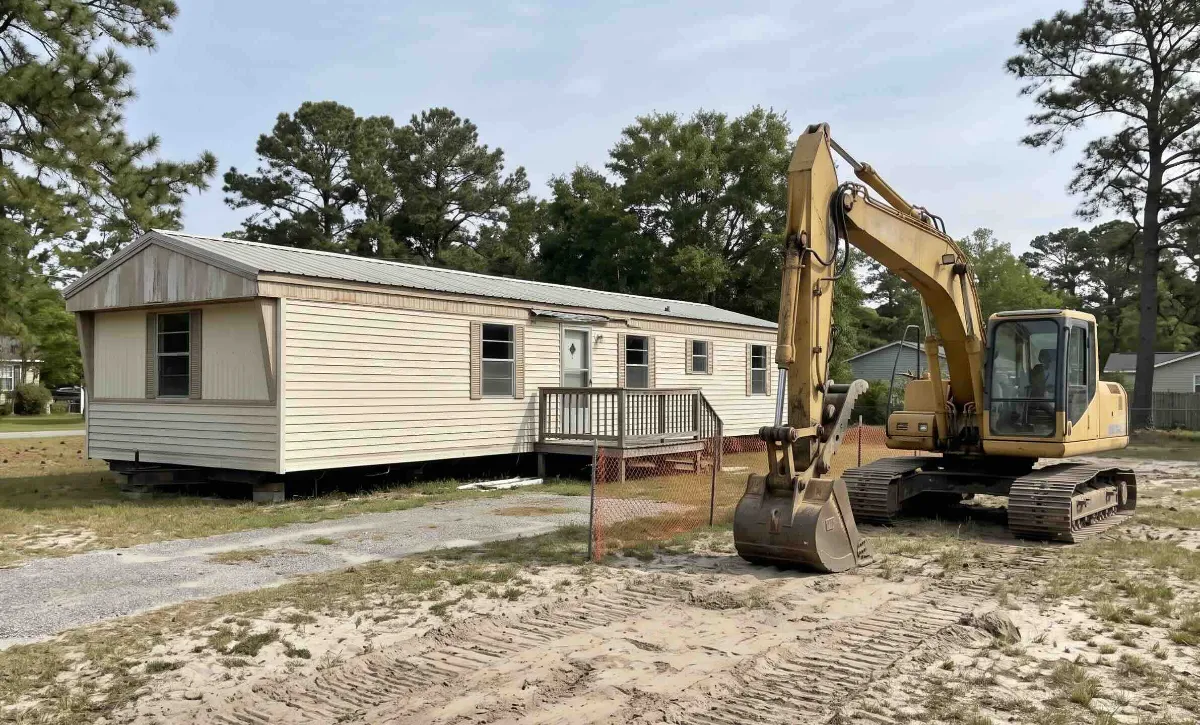
Mobile home removal in Wilmington NC often starts with a property owner looking at an aging home and wondering how much of the problem extends beyond the walls. A sagging porch, an addition built years later, a crowded interior, and utilities running beneath the structure can turn an apparently straightforward teardown into a project with several moving parts. Before our crew brings equipment onto the property, we need to understand those connections—and what you want the land to become once the home is gone.
Barnes Demolition approaches removal as a complete property project, not simply the dismantling of a structure. We look at the home, the surrounding improvements, the available access, and the work needed afterward. That approach helps owners across New Hanover County make decisions before demolition begins, when changing the plan is easier than changing an active job.
This guide explains what to expect, what information to gather, and how to define a removal project without relying on advertised prices that may have little connection to your property.
Start With What You Want Left Behind
A successful project begins with a description of the finished property. Do you want an old mobile home removed while keeping the driveway and storage shed? Are you replacing the home, selling the lot, or combining demolition with broader clearing work?
For mobile home removal, those answers shape the scope from the first site visit. Removing the structure alone differs from removing the structure, attached deck, concrete steps, support materials, abandoned utilities, and accumulated debris.
We encourage owners to separate their plans into three categories: what must go, what must stay, and what needs further evaluation. That simple exercise gives the conversation direction. It also helps prevent an estimate from overlooking something that seems obvious to the owner but may not be obvious to the contractor.
Define the Next Use of the Property
A lawn, a replacement manufactured home, and a future building site require different finishing plans. Demolition can remove an obstruction without completing every task needed for future development.
Owners planning mobile home removal in Wilmington NC should explain their next step even if construction remains months away. Knowing that plan helps us discuss whether the project should include additional concrete removal, clearing, or grading.
A commercial building redevelopment project in Wilmington NC may involve demolition of a mobile home alongside other structures. In that situation, the removal should fit the larger site plan rather than proceed as an isolated task.
Is the Home Being Relocated or Demolished?
“Removal” can describe two very different outcomes. One owner may want a usable home transported elsewhere. Another may need a deteriorated structure dismantled and hauled away as debris.
During planning for mobile home removal project, we clarify that distinction early. Relocation requires a separate evaluation of whether the home can travel, whether a suitable destination exists, and what transportation and setup requirements apply.
Do not assume that a home can move simply because someone originally delivered it to the property. Years of alterations, deterioration, and attached construction may change the situation. A relocation professional must assess that option on its own terms.
Know Which Service You Are Requesting
If demolition is the intended outcome, say so when requesting an estimate. Explain whether anyone has already evaluated moving or salvaging the home and whether another party expects to remove components first.
Our role in a demolition project is to establish a safe removal plan and a defined cleanup scope. A proposal for dismantling and disposal should not be confused with a proposal to transport an intact home to another address.
Establish Ownership and Permission Before Scheduling
An empty home does not automatically come with permission to demolish it. Ownership questions deserve attention before equipment arrives, particularly on inherited property, rented lots, or parcels where the land and home have different owners.
Before scheduling mobile home removal in Wilmington NC, identify who owns the structure, who controls the land, and who can authorize the work. If an estate, lender, park operator, or another party has an interest, resolve the necessary permissions first.
Gather the property address, parcel information if available, and any documents that help identify the home. Ask the appropriate offices whether demolition affects title, tax, or property records; do not assume that physical removal automatically updates them.
In New Hanover County, an accurate property location also helps establish which offices need to review the project. A Wilmington mailing address alone should not substitute for confirming the applicable jurisdiction.
Attached Additions Need Their Own Removal Plan
A mobile home rarely exists in isolation after decades of use. Owners add decks, screened porches, covered entries, rooms, ramps, carports, and storage areas. Some additions connect to the home; others stand nearby but share access or utilities.
A site review for mobile home removal should identify each attachment individually. We need to understand its construction, condition, connection to the home, and intended outcome.
A porch scheduled for removal belongs in the written scope. A freestanding carport the owner wants to keep needs protection and enough separation for the demolition work. Neither should remain an assumption.
Separate What Stays From What Goes
Walk the property with those distinctions in mind. Point out fencing, garden beds, nearby sheds, trees, driveways, and neighboring improvements that matter to you.
Planning mobile home removal in Wilmington NC also means identifying additions that may conceal problems. A finished room can cover an older exterior wall. A deck can block access to utility connections. Stored materials beneath a porch can add work that photographs from the driveway never reveal.
We use that information to discuss the removal sequence and the working space the crew needs. Clear decisions before demolition help protect the parts of the property you intend to keep.
Utilities Must Be Addressed Before Demolition
An unoccupied home can still have active electrical service, connected water lines, fuel equipment, or other services. A switch in the off position does not establish that demolition can proceed safely.
For mobile home removal in Wilmington NC, utility coordination belongs near the beginning of the project. The appropriate providers and qualified professionals must address disconnections, isolation, and any required verification before the crew disturbs affected components.
Owners should identify known electric, water, sewer, septic, propane, communication, and private utility connections. Include services that supply another structure through or near the home.
Protect Services That Must Remain
A property may contain a well that will continue serving another building or a power supply connected to a detached garage. Removing the mobile home should not accidentally interrupt something the owner needs.
Our planning for mobile home removal includes asking which services will remain after demolition. Tell us about private lines, irrigation, older repairs, and anything you know about buried connections.
Do not disconnect, cut, cap, or remove utility components yourself to accelerate the schedule. Explain the situation, and let the responsible provider or qualified trade professional establish the correct procedure.
Our guide to the demolition process provides additional context for how utility coordination fits into the larger project.
Permits and Environmental Review Come Before the Teardown
The physical work may attract the most attention, but the project must first address applicable approvals. Local demolition permits and state environmental requirements are separate matters; obtaining one does not automatically satisfy the other.
When arranging mobile home removal in Wilmington NC, we identify the permitting and environmental questions that need answers for the specific property. The home’s use, condition, materials, and project circumstances can affect the review.
North Carolina’s public-health guidance directs owners and contractors to address asbestos inspection, notification, and applicable removal requirements before demolition. An accredited professional should determine the requirements that apply rather than relying on an owner’s visual assessment.
Do Not Disturb Suspect Materials
Older flooring, wall materials, insulation, and other components may require professional evaluation. Appearance alone cannot establish whether a material contains asbestos.
For mobile home removal, owners should avoid stripping or breaking suspect materials while waiting for the demolition crew. Work intended to “help” can complicate handling and create an exposure concern.
Our Wilmington demolition permit guide introduces the local permitting questions. For properties in New Hanover County and neighboring jurisdictions, confirm current requirements for the actual project rather than borrowing assumptions from a previous teardown.
Decide What Happens to Furniture and Personal Belongings
A structure full of furniture requires a different plan from an empty one. Mattresses, appliances, clothing, tools, household chemicals, and packed storage spaces all deserve attention before demolition.
Before mobile home removal on your Wilmington, NC property, decide which belongings you will retrieve and which remaining contents you want addressed in the proposal. We need an accurate picture of the interior, including inaccessible rooms and items beneath the home.
Remove documents, medications, valuables, photographs, and anything with personal significance before the work area becomes restricted. If entering the home presents a safety concern, explain that condition instead of taking a risk.
Identify Materials That Need Separate Handling
Tell us about fuel containers, paint, chemicals, batteries, cylinders, and other materials that may need a separate handling plan. Do not assume everything inside a home belongs in the same disposal load.
A clear contents plan keeps mobile home removal from turning into an unexpected cleanout midway through the project. It also establishes responsibility: what the owner will remove, what the contractor will address, and what requires another service.
This is especially important for inherited or long-vacant properties. If you do not know what is inside, say so. An honest description is more useful than an optimistic guess.
Equipment Access Can Shape the Entire Job
A home may be easy to see from the road and difficult to reach with equipment. Narrow gates, soft ground, overhead lines, tight turns, drainage features, and neighboring structures can restrict the available approach.
Planning mobile home removal in Wilmington NC requires looking beyond the home’s dimensions. We assess how equipment will enter, where trucks can operate, and how debris will move from the structure to the loading area.
Owners can help by identifying shared driveways, access agreements, property boundaries, and surfaces they want protected. Mention delivery problems or drainage issues that do not show up during dry weather.
Leave Room for the Work
Do not place storage containers, parked vehicles, or salvaged materials in the expected equipment route before discussing the layout. Keeping access clear gives the crew more practical options.
For mobile home removal in Wilmington NC and nearby coastal communities, weather can change ground conditions and working arrangements. A realistic schedule should account for safe access rather than promise that equipment can operate regardless of site conditions.
We also discuss nearby occupants and property use. A removal beside an occupied home needs a clearly controlled work area and communication about when people must stay away.
What Happens During the Removal?
Once the project clears its preparation requirements, the crew follows the agreed sequence for dismantling, handling materials, loading debris, and addressing the remaining site.
During mobile home removal, the work should follow the structure’s condition and surroundings—not an improvised rush to knock it down. Attached improvements, utility locations, nearby property, and available space all influence the approach.
Owners do not need to manage equipment movements or direct the crew from beside the work area. They do need to remain available for questions that could affect the agreed scope.
Plan for Changes Without Losing Control of the Scope
Demolition can expose conditions that were hidden during the initial visit. Buried concrete, concealed debris, or unexpected construction may require a decision.
A defined scope makes mobile home removal easier to manage when that happens. The parties can compare the discovery with the proposal, discuss available options, and establish any additional work before proceeding.
That is different from leaving the scope vague from the start. We want the estimate to identify known work clearly while recognizing that concealed conditions cannot always be evaluated in advance.
Specify What Happens Below the Home
After the walls and roof disappear, the property may still contain support blocks, anchors, footings, concrete pads, utility components, or other improvements. Removing the home does not automatically answer what happens to those items.
For mobile home removal in Wilmington NC, discuss below-home materials during the estimate rather than after the last debris load. Decide whether the project includes their removal, evaluation, protection, or retention.
Some items may serve a future purpose; others may interfere with it. That decision should reflect the next use of the property and any appropriate professional review.
Treat Septic Systems and Wells as Separate Decisions
An existing septic system does not become irrelevant because the home is gone. The owner may want to retain it, replace it, or investigate abandonment requirements. A well needs the same deliberate consideration.
For New Hanover County properties, discuss these questions with the appropriate professionals and authorities before demolition disturbs surrounding areas. Do not assume that an old system can serve a replacement home without review.
We can discuss septic-related work as part of the broader project, but the written scope should identify exactly what the removal proposal includes.
Define Cleanup in Concrete Terms
“Cleaned up” can mean different things to different people. One owner expects structural debris hauled away. Another expects concrete removal, backfilling, grading, and a surface prepared for landscaping.
A proposal for mobile home removal in Wilmington NC should replace that ambiguity with specific tasks. Identify which debris leaves, which improvements remain, how disturbed areas will be addressed, and whether additional site work belongs in the project.
Ask about the expected condition of the lot at completion. A cleared demolition footprint is not automatically an engineered building pad, a finished lawn, or approval for new construction.
Connect Cleanup to the Next Contractor’s Needs
If another contractor will install a home or begin construction, share their requirements before finalizing demolition. Coordination can reveal work that would otherwise require a second mobilization.
Our residential demolition services guide explains the broader removal and cleanup scope. The important point is to define your project specifically rather than rely on a general phrase such as “ready to build.”
Request an Estimate That Reflects Your Property
No two homes share exactly the same condition, attachments, contents, access, or finishing requirements. A useful estimate accounts for those differences instead of forcing the property into a standard advertised price.
When requesting mobile home removal in Wilmington NC, provide the address, approximate dimensions, photographs, occupancy status, known utility information, and a description of attached structures. Include interior photographs only when you can take them safely.
Tell us what you know and identify what remains uncertain. You do not need a complete technical assessment before making contact. You do need to describe your expectations honestly.
Information That Helps Us Evaluate the Work
Useful details include:
- Whether the home is single-wide, double-wide, or another configuration.
- Whether the structure has fire, storm, water, or structural damage.
- Which additions and accessory improvements need removal.
- Whether furniture, appliances, or stored materials remain.
- How equipment can reach the home.
- Whether concrete, supports, or anchors should be included.
- What services or neighboring improvements must remain.
- What you plan to do with the property afterward.
That information gives mobile home removal in Wilmington NC a defined starting point. A site visit can then address the details that photographs and phone conversations cannot settle.
Review the proposal for inclusions, exclusions, owner responsibilities, and the expected finishing condition—not just the final figure.
Prepare for the Scheduled Work
Once the scope is agreed, focus on completing your responsibilities. Retrieve belongings, arrange access, move vehicles, secure pets, and tell anyone using the property about the planned restrictions.
Do not begin dismantling parts of the home unless the project team has specifically addressed that work. Removing stairs, supports, walls, or attached materials can change access and structural conditions.
Our property preparation guide for residential demolition offers a broader checklist. Use it alongside the instructions for your actual property.
For mobile home removal in Wilmington NC, communication matters most when something changes. Tell us if another contractor enters the site, a utility appointment moves, an access route becomes blocked, or someone removes material before our arrival. Those changes can affect the plan.
Work With a Contractor Who Looks Beyond the Structure
Barnes Demolition provides residential demolition, concrete and foundation removal, debris hauling, clearing, grading, and septic services across Wilmington and the Cape Fear region. That range allows us to discuss the home and the surrounding site together rather than treat every obstacle as an unrelated job.
We work with owners in New Hanover County and surrounding communities, including Leland, Hampstead, Rocky Point, and Holly Ridge. The right starting point is a conversation about the property—not a generic promise about price or completion time.
Call Barnes Demolition at (910) 807-5640 to discuss the home, access, attachments, and your plans for the lot. Bring your questions about what stays and what goes. Those answers form the basis of a useful removal plan.
Frequently Asked Questions
Can an old mobile home be moved instead of demolished?
Possibly, but a qualified relocation professional must evaluate whether the home can be transported and accepted at a suitable destination. Condition, alterations, access, transportation requirements, and destination approvals all matter. A demolition estimate covers a different service from moving an intact home. Establish which outcome you want before comparing proposals.
Do I need a permit to remove a mobile home in New Hanover County?
Confirm demolition permit requirements with the office responsible for your property before work begins. Also address applicable state environmental requirements separately. Provide the exact address and explain whether the project involves demolition or relocation, attached additions, and other site work. Do not assume a contractor’s permit from another project covers yours.
Can furniture and appliances stay inside during demolition?
Only if the contractor has evaluated the contents and included the appropriate handling in the scope. Identify remaining furniture, appliances, stored materials, and potentially hazardous products before accepting a proposal. Remove valuables and personal documents beforehand, and never enter an unstable home solely to empty it without discussing the safety concern.
Does mobile home demolition include decks, foundations, and concrete pads?
Those items belong in the project only when the written scope includes them. Identify decks, porches, steps, support materials, footings, pads, and nearby structures during the site review. Specify what should remain. Removing the home itself does not establish that every improvement above or below the ground will also be removed.
How does Barnes Demolition estimate a mobile home removal project?
We evaluate the work required for the particular property. Relevant details include the home’s size and condition, attached construction, remaining contents, equipment access, utility coordination, debris handling, and requested cleanup. Photographs and property information help begin the discussion, while an on-site evaluation helps clarify conditions and define the written proposal.
Will the property be ready for a replacement home afterward?
That depends on the agreed scope and the requirements for the replacement home. Structural removal and debris cleanup do not automatically include every grading, foundation, utility, septic, or approval requirement. Tell us about the replacement plan before demolition so the removal work can coordinate with the professionals responsible for the next phase.