Construction Site Compliance: What You Need to Know Before Demo Begins
Demolition work sits at the intersection of construction, environmental regulation, and workplace safety. Whether you’re a general contractor managing a commercial teardown or a property owner clearing a lot for new development, understanding the compliance landscape upfront prevents costly delays, fines, and liability exposure.
Here’s what you need to know about demolition compliance in the Wilmington, NC area.
OSHA Requirements for Demolition Sites
The Occupational Safety and Health Administration governs demolition safety under 29 CFR 1926, Subpart T. Key requirements include conducting an engineering survey of the structure before work begins, developing a demolition plan, bracing adjacent structures, and implementing fall protection for workers operating at height.
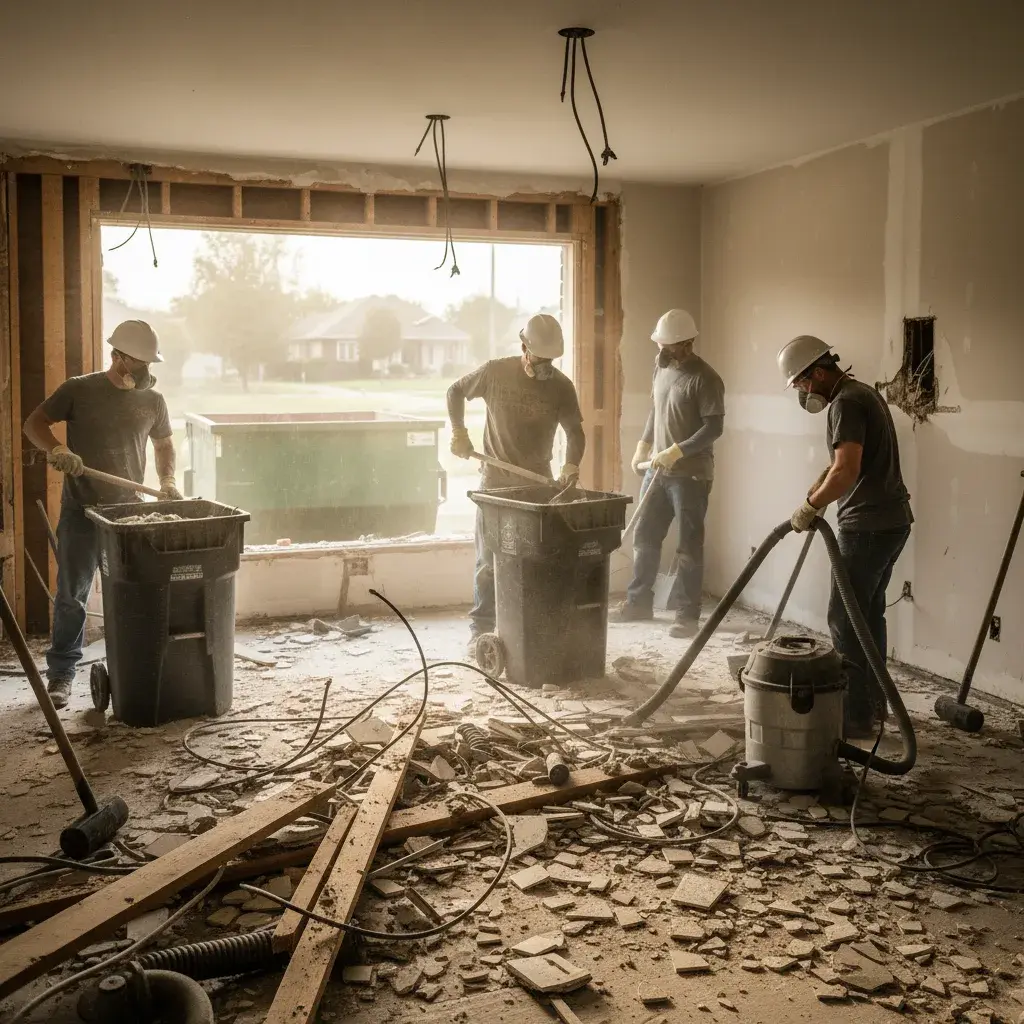
Every person on a demolition site must wear appropriate personal protective equipment — hard hats, steel-toed boots, eye protection, hearing protection, and respiratory equipment when dust or hazardous materials are present. At Barnes Demolition, our crew is trained and certified on OSHA demolition protocols, and our safety record reflects that commitment.
North Carolina Demolition Permits
Demolition permits are required in most North Carolina municipalities, including Wilmington, Leland, and Hampstead. The permit process typically involves submitting a demolition application, providing proof of utility disconnections, and — for commercial or industrial structures — an asbestos survey conducted by a certified inspector.
In the City of Wilmington, permits are issued through the Development Services department. Processing times vary, but you should budget at least two weeks for permit approval. Barnes Demolition handles permit coordination as part of our standard service — we know the local process and can streamline the timeline.
Environmental Regulations and Asbestos
North Carolina’s Department of Environmental Quality requires a thorough asbestos inspection for all commercial demolition and most residential demolition involving structures built before 1980. If asbestos-containing materials are identified, they must be removed by a licensed abatement contractor before demolition can proceed.
The state also regulates disposal of demolition debris. Materials must be transported to permitted construction and demolition landfills, and certain materials — treated wood, concrete, metals — may require separation for recycling. We work with licensed disposal facilities and maintain full chain-of-custody documentation for every load we haul.
Dust and Noise Management
Demolition generates dust and noise — there’s no avoiding it. But there are strict expectations around managing both, especially on sites near residential areas, schools, or healthcare facilities. Water trucks and hose suppression systems are standard practice for controlling airborne particulate during active demolition.
Noise ordinances vary by municipality, but most jurisdictions restrict heavy equipment operation to daytime hours — typically 7:00 AM to 7:00 PM on weekdays. We plan our work schedules around local ordinances and communicate proactively with neighboring properties when working in dense areas.
Insurance and Liability
Any demolition contractor working in North Carolina should carry general liability insurance, workers’ compensation, and — for larger projects — an umbrella policy. Before hiring a contractor, ask to see current certificates of insurance. If a contractor can’t produce them, walk away.
Barnes Demolition is fully licensed, bonded, and insured in the state of North Carolina. We carry comprehensive general liability and workers’ compensation coverage, and we provide certificates of insurance to every client before work begins. No exceptions.
Staying Ahead of the Compliance Curve
The smartest approach to demolition compliance is building it into your project timeline from day one. Budget time for permits, inspections, and abatement. Choose a contractor who understands the regulatory landscape and handles coordination as part of the job — not as an afterthought.
Have questions about permits, compliance, or project planning? Contact Barnes Demolition — we’ll walk you through every step.